


16 April 2026
The population of the greater Dublin area passed 1.4 million in Ireland’s 2022 census and is projected to reach 1.6 million by 2030. That growth is not happening in the suburbs. It is concentrated in the city centre and the inner commuter belt, driven by the tech sector expansion in the Docklands and the sustained in-migration of workers from across Europe. For a QSR investor, a city growing that fast, with that concentration of working-age adults spending money on daily meals, is a market worth examining before it reaches the saturation levels already visible in London or Manchester.
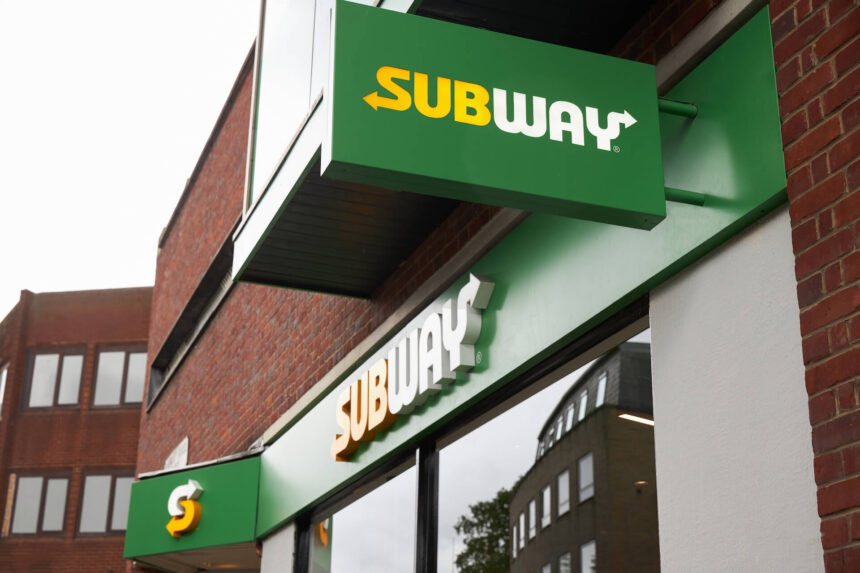
Subway® has operated in the Republic of Ireland for decades and has an established presence in Dublin, Cork, Limerick, and Galway. Dublin remains the primary growth focus given the pace of commercial development and the density of footfall in its retail and business districts.
What the Irish market looks like financially
The Republic of Ireland operates in euros, and Subway Franchisee Partners in the ROI operate under a franchise structure that reflects local taxation, employment legislation, and supplier logistics. The core franchise model, including royalty rates, training requirements, and brand standards, is consistent across markets.
Labour costs in Ireland have increased substantially since 2020. The national minimum wage reached €13.50 per hour in January 2025, making it one of the highest minimum wage rates in the EU. At a Subway restaurant spending 28% of revenue on wages and running 60-70 labour hours per week, that hourly rate has a material impact on the cost structure compared to a UK unit operating under equivalent conditions. This is not a reason to avoid the Irish market. It is a reason to model Irish labour costs accurately in your financial projections rather than importing UK cost assumptions without adjustment.
Rent in central Dublin is higher than in most UK regional cities outside London. Grafton Street, O’Connell Street, and the Docklands all carry premium occupancy costs that require correspondingly strong revenue volumes to justify. Secondary locations in the inner suburbs, commuter towns, and secondary shopping centres typically offer a better occupancy cost ratio for QSR operators and should not be dismissed because they lack the profile of a city centre address.
Dublin versus the rest of the Republic
Outside Dublin, the Irish QSR market is considerably less competitive than the equivalent mid-sized UK city. Cork is Ireland’s second city with a population of approximately 222,000 and a buoyant food service economy, but it has a fraction of the QSR density visible in a similarly sized English city. Limerick and Galway are experiencing population growth driven by university expansion and remote work migration that has made secondary Irish cities more commercially attractive than they were a decade ago.
For a franchisee willing to look beyond Dublin’s most visible commercial streets, the opportunity in Ireland’s regional cities is real and largely un-saturated.
The border corridor for ROI investors
Investors based in or familiar with the Republic should also consider the economic dynamics of the Northern Ireland border corridor. Dundalk, Drogheda, and Monaghan draw cross-border traffic depending on currency conditions and specific retail pricing. A QSR unit in Dundalk, for example, serves both its immediate local catchment and consumers crossing south from Newry who are in the area for retail or other purposes. These cross-border traffic patterns are not consistent enough to build a financial model around, but they are a genuine upside in well-positioned border locations.
How to proceed
Franchise development for the Republic of Ireland is handled separately from the UK, and the application process reflects the different regulatory environment. If you are interested in a Dublin or Republic of Ireland territory, the starting point is direct contact with Subway’s Ireland franchise development team rather than the UK contact.
Available territories in Dublin are not unlimited, and the locations that produce the strongest footfall attract interest from multiple brands simultaneously. The window for entering the Irish QSR market at pre-saturation pricing and rent levels is narrowing as the city grows. It has not closed, but it is not as wide as it was five years ago.
26 March 2026
How to Buy a Fast Food Franchise Opportunity in the...
26 February 2026